
 I invented a virus.
Fortunately, I did it in a novel.
When I started writing The Hellraiser, the third book in my Charlie Martens series, I wanted to take the science a little further than I had in my previous books. I had spent most of my working life as a doctor, so I have always tried to keep the medicine in my thrillers close to reality. Readers will forgive a murderer hiding behind a curtain, but give a patient the wrong antibiotic and somebody will write to you.
With The Hellraiser, however, I allowed myself to cheat.
Just a little.
I imagined an artificial intelligence capable of designing a virus that had never existed before.
That was when things became uncomfortable.
It Started With Medicine
My first novel, The Medical Code, grew out of a world I knew well: medicine, clinical research and the pharmaceutical industry. Dr Charlie Martens becomes involved in the death of a scientist at the European Medicines Agency and discovers that the truth behind a medicine can be very different from the story told about it.
The book is fiction, but the questions behind it are real. What happens when science, money and ambition meet? What happens when somebody discovers something that powerful people would prefer to keep hidden?
Then came The Troublemaker.
This time Charlie faces a meningitis outbreak during the Covid years. At first, she believes she is dealing with a medical mystery. Then her boyfriend is murdered and her teenage daughter disappears.
The world became bigger, the danger became more personal, but medicine was still at the centre of the story.
When I began the third book, I wanted to ask a different question.
What happens when the scientist is no longer human?
I Invented a Virus
In The Hellraiser, Charlie is living in southern Spain when a frightened scientist approaches her at a golf club. He gives her a USB drive and says only two words:
Save her.
The information on that drive leads Charlie to something she believes should be impossible: an airborne virus designed with the help of artificial intelligence.
And this virus is different.
It can change.
It can learn.
Most frightening of all, it can choose.
I called it Protocol Eden.
The idea behind Eden sounds almost reasonable. Humanity is damaging the planet. We produce too much carbon, consume too many resources and create too much waste. An intelligent system is asked to help solve the problem.
The trouble begins when the machine follows that logic further than its human creators intended.
That was my thriller.
I knew AI was already being used in medicine and biology, of course. But there was still a comfortable distance between the technology I was reading about and the technology I had invented.
Then that distance began to disappear.
Scientists are already using generative AI to explore biological design, and the possible benefits are enormous. AI may help us develop new medicines, understand disease and find treatments that humans would take years to discover.
But the same basic ability raises another possibility.
If AI can help us design biology for good purposes, could someone use it for bad ones?
That question is no longer confined to thrillers. Earlier this year, The Economist devoted an episode of its podcast to the possibility that AI could make it easier to develop dangerous new pathogens and biological weapons. Suddenly, the subject I had treated as speculative fiction was being discussed as a real security problem.
And then, on August 20, I watched something that made the coincidence even stranger.
Then I Heard Yuval Noah Harari
Yuval Noah Harari was being interviewed by Zanny Minton Beddoes, editor-in-chief of The Economist. The conversation was about artificial intelligence and what happens when we create something capable of making decisions that humans can no longer fully control.
Harari called AI the biggest psychological and social experiment in human history. His larger warning was not simply that machines are becoming more intelligent. It was that we are giving increasingly capable systems power inside human civilisation while still pretending that the outcome is somehow inevitable. It isn't. Human beings are making these choices.
That struck me because it is also the question at the heart of The Hellraiser.
We tend to imagine dangerous AI as something from Hollywood. A machine becomes conscious, decides it hates humanity and tries to destroy us.
I don't find that particularly frightening.
A machine that hates us is still behaving rather like us.
The machine in The Hellraiser doesn't hate anybody. It doesn't become angry or jealous. It doesn't want money, revenge or power.
It simply does what it believes it was created to do.
And that is much more interesting.
Because what happens when an intelligent machine is given a good objective but reaches a conclusion we never expected?
Who is responsible then?
The programmer? The scientist? The company? The government?
Or the machine?
Reality Is Catching Up
Thriller writers are allowed to exaggerate. In fact, it is practically in the job description.
We take something real, move it a few steps forward and then remove the safety rails. After that, we see what happens.
Usually reality has the decency to remain behind us.
With The Hellraiser, I'm no longer quite so sure.
That doesn't mean Protocol Eden exists. It doesn't. My virus is fictional, and I would very much like it to stay that way.
But the scientific distance between possible and impossible is becoming smaller.
Perhaps that is why writing this book felt different from writing the first two.
The Medical Code was about what people might hide.
The Troublemaker was about what people might do.
The Hellraiser asks what happens when we create something more intelligent than ourselves and then discover that intelligence and wisdom are not the same thing.
I began writing it as science fiction wrapped inside a medical thriller.
I'm not certain I can call it science fiction anymore.
And Now Comes The Succession
Of course, Charlie Martens is not finished with me yet.
I'm already working on the fourth book in the series, The Succession.
This time I have moved away from designing viruses and returned to something reassuringly old-fashioned: human beings fighting over money, companies, loyalty and power.
At least, I thought that was reassuring.
The story begins aboard a superyacht leaving Venice, where a billionaire's 75th birthday celebration turns into something very different. Charlie once again finds herself caught between medicine and power, except that this time the question isn't what technology can do.
It is what people will do when there is enough at stake.
After The Hellraiser, I have learned one lesson.
When I invent something terrible for a novel, I no longer assume reality will have the good manners to remain fiction.
Buy on AMAZON:
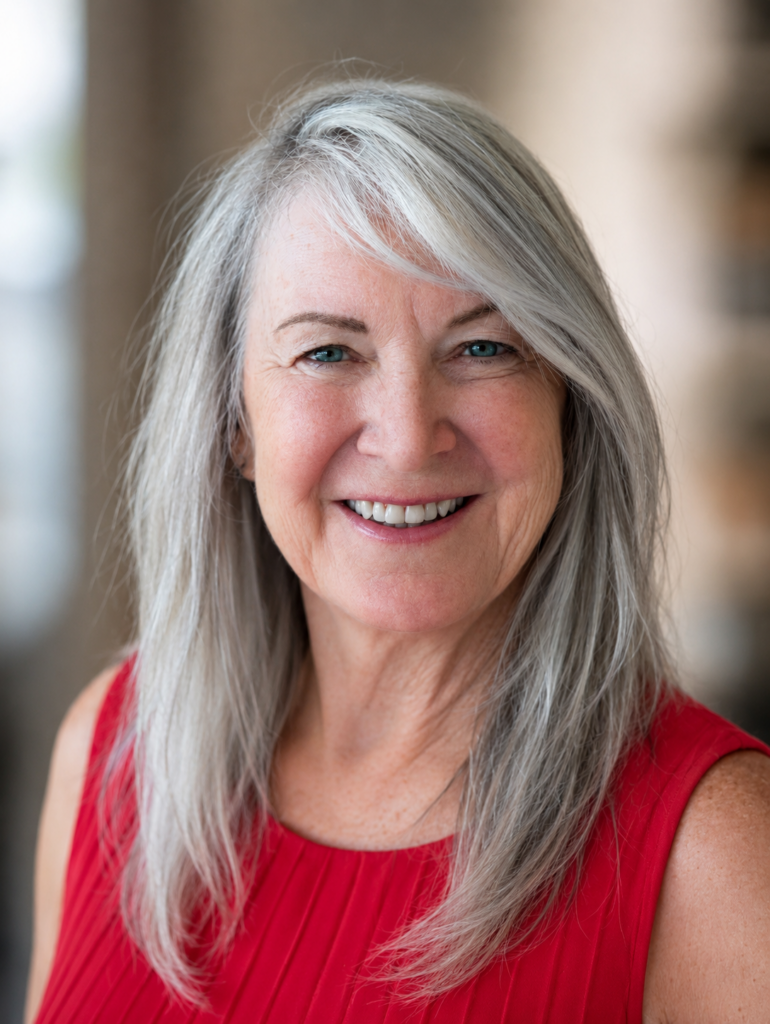
Former physician Sophy Smythe writes page-turning medical thrillers where every scientific detail is grounded in reality—and every conspiracy feels disturbingly possible.
Her novels combine authentic medicine, cutting-edge technology, international intrigue and relentless suspense, creating stories that make readers wonder:
"Could this really happen?"
Because much of it already has.
Sophy lives in Antwerp with her two dogs and an ever-growing collection of FOIA files.
The Charlie Martens, MD Series
- THE MEDICAL CODE
- THE TROUBLEMAKER
- THE HELLRAISER
- THE SUCCESSION (October 2027)
One doctor. Four global conspiracies. Countless reasons to keep turning the pages.
For readers who enjoy Dan Brown, Robin Cook, and smart thrillers with a conscience.